Affiliate links on Android Authority may earn us a commission. Learn more.

I spent two weeks with the Galaxy S26 and Galaxy S26 Plus — and only one is worth buying
Samsung Galaxy S26
MSRP: $899.99
What we like
What we don't like
Samsung Galaxy S26
Whenever new Galaxy S phones are released, the conclusion for them is usually the same: Get the baseline model if you want a compact phone, get the Plus if you want a bigger screen without spending too much, and get the Ultra if you want Samsung’s absolute best.
That thinking holds true for the Galaxy S26 Ultra, but what about Samsung’s other two phones? Are the Galaxy S26 ($899.99 at Samsung) and Galaxy S26 Plus ($1099.99 at Samsung) still safe recommendations for Samsung fans who need an upgrade this year?
After using both phones for over two weeks, the answer to that question is murkier than it’s ever been. The S26 and S26 Plus are both fine Android phones, but there’s only one I’d truly feel comfortable recommending.
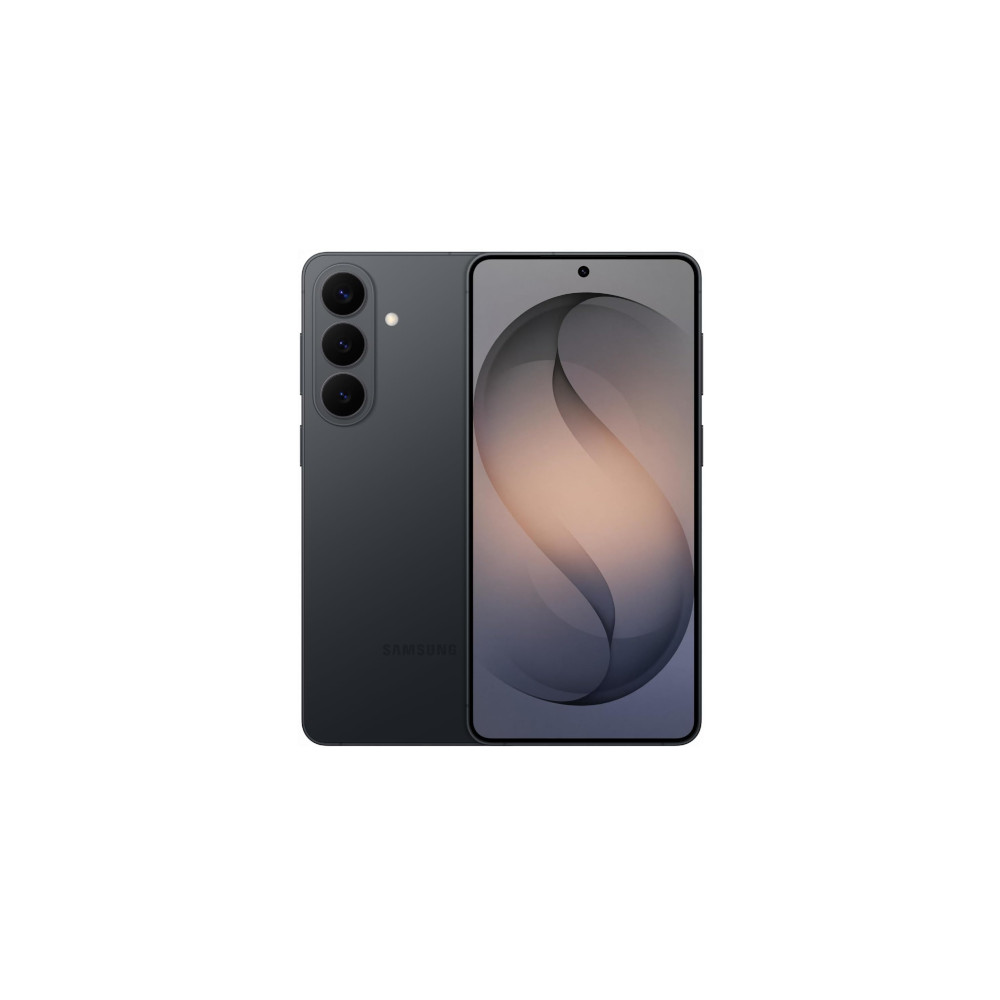
The S26 is a comfortable phone, but this design has to go

Tell me if you’ve heard this one before: this year’s new Samsung phones look almost identical to last year’s. Shocking, I know.
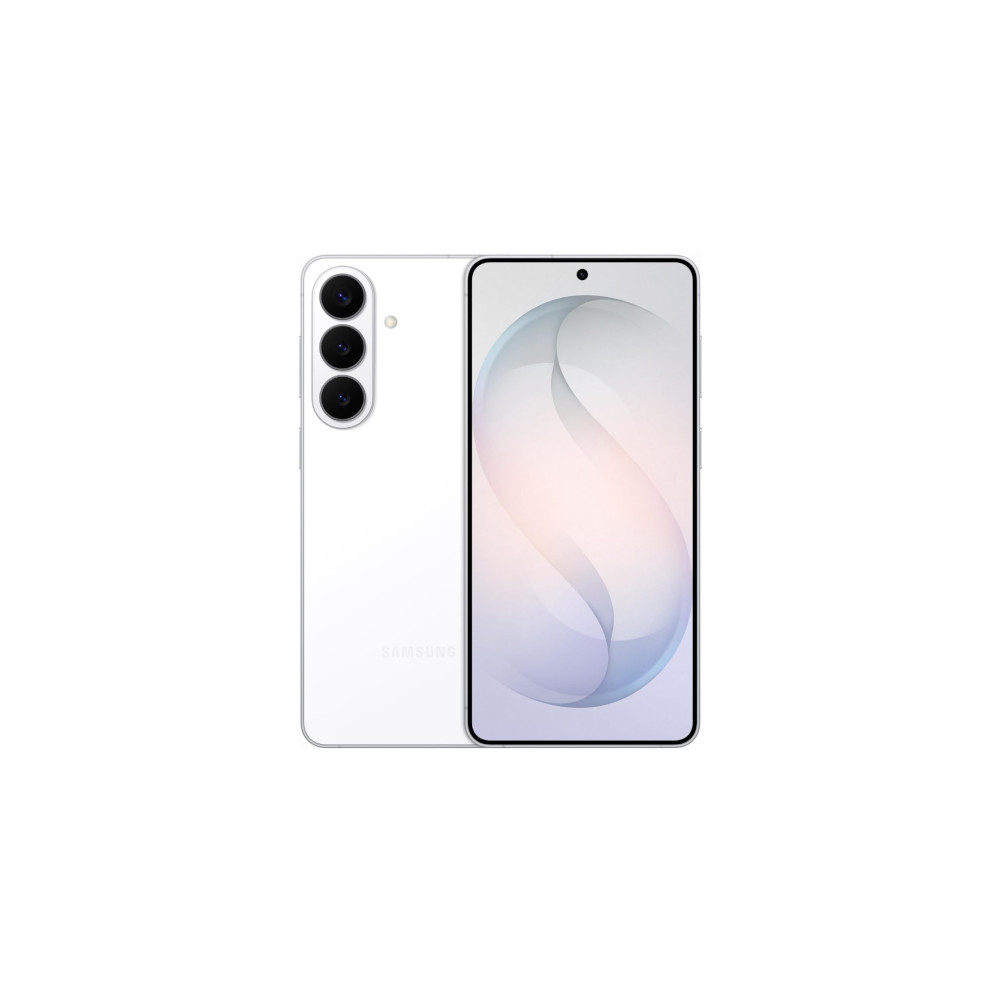
The big design change for the 2026 series is that the rear camera sensors are now housed on a camera island, similar to the Galaxy Z Fold 7. There are also some new colors (none of which are particularly exciting), and the base Galaxy S26 is five grams heavier than its predecessor. Otherwise, the S26 and S26 Plus are basically the same phones as the S25 and S25 Plus.
What I will say is that even though it’s a little heavier this year, the Galaxy S26 remains one of the most compact and lightweight “flagship” phones on the market.
As practical as the Galaxy S26 may be, Samsung is long overdue for a proper design refresh.
At just 167 grams, it makes the 204-gram Google Pixel 10 feel like a brick. The S26 is so lightweight and easy to hold, and that’s honestly one of the best things about the phone. The S26 Plus isn’t outrageously heavy at 190 grams, but it’s not as magically petite as its baseline sibling.
This has been the case for the Galaxy S and Galaxy S Plus for several generations now, and that’s really what the entire design this year boils down to. As practical and tested as the S26 series design might be, Samsung is long overdue for a refresh. Give us some actually exciting colors. Try a different camera bump shape. Ship a phone with Qi2 magnets built into the back. Do something new.

Maybe none of this matters if you’re going to throw a case on your S26, but I still think it’s pretty damning for Samsung that the $500 Google Pixel 10a is more visually interesting and exciting than Samsung’s $900 and $1,100 flagships.
The Pixel has no camera bump! It has one of the best red colors I’ve ever seen on a phone! These are things that make me want to pick up and interact with the Pixel 10a, and Samsung’s S26 and S26 Plus just don’t create that same feeling at all.
A new Snapdragon chip is nice — but what about the other specs?

Samsung may not have much going for it in the design department, but the company continues to deliver on performance. While the S26 and S26 Plus are powered by an Exynos 2600 in many international markets, the US versions get Qualcomm’s Snapdragon 8 Elite Gen 5 chip — check out our deep dive into the Exynos variant to see the difference. For the US model, though, that bleeding-edge Snapdragon silicon makes the S26 and S26 Plus tremendously powerful.
In both CPU and GPU performance, the Snapdragon 8 Elite Gen 5 provides a nice boost over last year’s Snapdragon 8 Elite in the S25 and S25 Plus. The S26 Plus technically outpaces the regular S26, but both phones are extremely capable. Compared to other non-Samsung phones, the S26 and S26 Plus perform similarly to the OnePlus 15 (unsurprising, given it’s also powered by a Snapdragon 8 Elite Gen 5), and blow past the Pixel 10 Pro and its Tensor G5 chip.

Whether or not you need that much horsepower depends on your smartphone usage, but there’s no denying that both the S26 and S26 Plus are among the most performant Android phones on the market today. Not only do they excel at benchmark tests, but they’re extremely fast and reliable in day-to-day use. Performance is always something Samsung nails with the Galaxy S series, and that’s no different this year.

Something else Samsung nails is display quality. While there aren’t any major changes in AMOLED panel technology, refresh rates, resolution, or brightness levels compared to the S25 series, the S26 and S26 Plus still offer very enjoyable screens.
The only notable difference this year is that the S26 has a slightly larger 6.3-inch display compared to the S25’s 6.2-inch display. It’s not a significant change, but considering the phone is still easy to use one-handed, I’m happy to have the extra real estate. It’s unfortunate that Samsung’s fancy new Privacy Display is exclusive to the Galaxy S26 Ultra — especially considering how expensive the S26 Plus is — but that’s the hand Samsung has dealt.

Where things get really frustrating is the camera system. The S26 and S26 Plus both have a 50-megapixel primary camera, a 10MP 3x telephoto camera, and a 12MP ultrawide camera. If that sounds familiar, that’s because it’s the exact same setup Samsung used in the Galaxy S25 and S25 Plus. In fact, it’s the same system the company has been using since the Galaxy S22 and S22 Plus — phones that were released four years ago.
Are the cameras downright terrible or completely unusable? No. But for a $900 Galaxy S26 — and especially for an $1,100 Galaxy S26 Plus — these sensors aren’t acceptable.
These are fine cameras for a $600 or $700 phone, but not for the prices Samsung is asking for the S26 and S26 Plus.
The primary camera can take decent photos (and its colors are much more pleasing than the Pixel 10a I was previously using), but its limitations are hard to miss. The smaller sensor size means there’s a lot of ghosting around a subject when you get too close. The primary camera really struggles with moving subjects and doesn’t hold up well in low-light conditions (or even in the presence of dark-furred animals).
The flexibility of the telephoto and ultrawide cameras is nice, but there’s such a big discrepancy in photo quality (particularly color reproduction) when comparing images taken with all three sensors. And while you can technically zoom up to 30x on both phones, things look pretty bad as soon as 10x.
This would be a fine camera solution for a $600 or $700 phone, but not for the prices Samsung is asking for the S26 and S26 Plus. If Samsung wants its non-Ultra handsets to compete with the best camera phones, it’ll need to consider bringing some long-overdue upgrades to the S27 series.
To take a closer look at the middling camera results, you can view high-res photo samples in this Google Drive folder.

Things aren’t much better when it comes to battery life and charging. The Galaxy S26 has a slightly larger 4,300mAh battery compared to the Galaxy S25’s 4,000mAh cell, while the S26 Plus remains unchanged at 4,600mAh.
Both phones consistently last one full day of use per charge, but don’t expect anything beyond that. This isn’t like the OnePlus 15 and its monstrous 7,300mAh battery, which can last between two and three days on a single charge. Samsung’s battery life is perfectly adequate and nothing more.
Charging speeds are similarly unimpressive, if not more so. The specs are unchanged from the S25 series, meaning another year of 25W wired charging for the base Galaxy S26 and 45W for the Plus.

For real-world charge times, that translates to the S26 Plus going from dead to 100% in exactly 60 minutes, while the S26 takes about 80 minutes to do the same. While that is better than the Pixel 10 Pro, that’s not exactly a high bar to reach. Compare either the S26 or S26 Plus to a phone with proper fast charging (such as the OnePlus 15 or S26 Ultra), and it’s immediately clear just how sluggish they are — particularly the baseline S26.
You’ve also got the usual wireless and reverse wireless charging options, but as mentioned above, Samsung didn’t go the extra mile to include Qi2 magnetic charging. In 2026, for phones this expensive, not including integrated magnets is absurd.
Ignore the AI, and One UI 8.5 is pretty good

As has become standard for modern Samsung phones, the Galaxy S26 and S26 Plus are loaded with AI features. In addition to existing things like Now Brief, note summaries, and AI-powered photo editing tools, the S26 adds a lot of new AI extras to the mix. At least from my experience, none of them are particularly noteworthy.
One of the hallmark features, Now Nudge, is supposed to suggest contextual replies. For example, if someone texts you asking if you’re free on a certain day, you’ll get a recommended shortcut to check your calendar. It’s a fine idea on paper, but there are some problems. Not only have I not seen Now Nudge appear in any of my conversations, but you have to use Samsung Keyboard to use it — no thank you!
Samsung’s Creative Studio image generator app works well enough, but you still couldn’t pay me to care about AI-generated “artwork.” AI-powered call screening isn’t the most inventive feature we’ve ever seen, but it’s good to have. The S26 also shows Samsung dabbling with AI notification summaries, but as with most other implementations, it’s extremely unhelpful.

Truth be told, I’ve hardly touched any of Samsung’s AI toolkit. A select few features are nice to have, but the rest are (thankfully) easy enough to ignore.
Looking beyond the AI veil, One UI 8.5 — like other One UI versions — is a heavy Android skin. There are so many extra features, so many settings to tweak, and no trace of Google’s Material 3 Expressive design elements.
One UI gives you the tools to do just about anything.
By now, you probably know whether you like One UI or not. I personally don’t love how much I have to tweak before I really feel comfortable with a Samsung phone, but that also speaks to why One UI has its fans. It may take a while to get One UI 8.5 to work the way you want, but you have the tools to get there — and I do appreciate that.
I also appreciate Samsung’s continued commitment to software updates. Like all other Samsung flagships from the last few years, the Galaxy S26 and S26 Plus are both promised seven years of security patches, Android OS upgrades, and other updates.
Should you buy the Samsung Galaxy S26 or the S26 Plus?

I don’t think either the Galaxy S26 or the S26 Plus is particularly impressive. These are effectively the same phones as last year, which were the same phones as the year before that, and so on. However, while we can usually recommend both the base and Plus models for committed Samsung fans, I don’t think that’s true with the S26 series.
If you like Samsung phones and desperately need an upgrade, the base model Galaxy S26 is a fine choice. It has the same Snapdragon 8 Elite Gen 5 chip as the other two more expensive S26 models, the same cameras as the S26 Plus, and comes in a much more comfortable, pocketable form factor than its two larger siblings.
The Galaxy S26 is a decent enough phone for an upgrade, but the Plus simply doesn't make any sense at all.
As you might have heard, the S26 is more expensive this year, but it also comes with double the storage — 256GB instead of 128GB. That’s $100 more than the 128GB Galaxy S25 and $40 more expensive than the 256GB version. It’s not ideal, but it could have been a lot worse. It could have been like the Galaxy S26 Plus.
- Snapdragon 8 Elite Gen 5 is the real deal
- 256GB of base storage
- Seven years of software updates
- Wonderfully lightweight and compact
- No major design changes ... again
- Severely outdated cameras
- Big price increases

Samsung’s Plus model has always been the awkward middle child of the Galaxy S family, and this year, it simply doesn’t make any sense at all. There’s no storage upgrade like the S26 benefits from, but the S26 Plus is still more expensive. The 256GB model sees a $100 price increase to $1,100, while the 512GB variant was hit with a whopping $180 price increase to $1,300.
At $1,100, there’s now only $200 separating the S26 Plus and the S26 Ultra (whose 256GB model remains at the same $1,300 we saw last year for the S25 Ultra). That extra $200 gets you the excellent new Privacy Display, a significantly more capable camera system, a larger battery, much faster 60W wired charging, and — of course — the S Pen. And if you’re buying from your carrier, that $200 difference is probably only about $5 more per month on your payment plan.
To be clear, I don’t think the regular Galaxy S26 is a fantastic value either. The Galaxy S25 ($799.99 at Samsung) is practically the same phone (just with an older but still excellent Snapdragon 8 Elite chip) and will almost certainly see hefty discounts as the year goes on.
The Galaxy S series desperately needs a revamp, and the S26 and S26 Plus make that point clearer than ever before.
The Google Pixel 10 ($549 at Woot!) is $100 cheaper, and while it has half the storage, I also greatly prefer its design, software, and integrated magnets. And if you’re OK with a larger smartphone, the OnePlus 15 ($899.99 at Amazon) delivers significantly better battery life, faster charging, and more advanced cameras than the S26, too — all for the same $900 price tag.
If you need a new Samsung phone, don’t want an older model, and have found a good deal on the Galaxy S26, go ahead and buy it. It’s exactly the phone you think it is. But if you can escape Samsung’s grasp, there are better ways to spend your money. This was basically our conclusion for the Galaxy S25, and it hasn’t changed this year.
However, it’s important to note that this strategy won’t keep working for Samsung forever. The Galaxy S26 Plus is already overpriced and no longer worth buying, and the baseline Galaxy S26 is dangerously close to reaching that point, too. The Galaxy S series desperately needs a revamp, and the S26 and S26 Plus make that point clearer than ever before.
- Snapdragon 8 Elite Gen 5 is the real deal
- 256GB of base storage
- Seven years of software updates
- No major design changes ... again
- Severely outdated cameras
- Big price increases
Don’t want to miss the best from Android Authority?
- Set us as a favorite source in Google Discover to never miss our latest exclusive reports, expert analysis, and much more.
- You can also set us as a preferred source in Google Search by clicking the button below.


Thank you for being part of our community. Read our Comment Policy before posting.