Affiliate links on Android Authority may earn us a commission. Learn more.
Camera Looks may finally fix the biggest sin of Google Pixel cameras
Aug 14, 2026 — 5:00 AM ET


For years, Google Pixel phones have earned a reputation for being incredible point-and-shoot cameras. Sure, if you want to get down and dirty with prosumer features, Chinese OEMs have everyone else beat. But out of the box, it’s hard to argue that the Pixel makes it absurdly simple to get great shots, albeit with a caveat.
Google, by the very nature of its approach to imaging, has leaned hard into an aggressive HDR implementation. This can often mean flat-looking images with artificially lifted shadows and details that are just a bit too sharp for my liking.
But with the arrival of the Pixel 11 series, Google is about to give you a bit more control over how your image looks. With the Camera Looks feature, Google is giving users access to an array of film-inspired color profiles that could address a long-standing flaw of its camera processing — and I’m 100% here for it.
What do you want most from your phone's camera?
The problem with Google’s aggressive processing
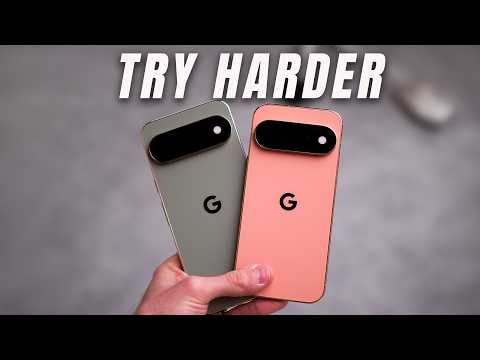
When Google introduced HDR+ on early Pixel devices, it was a massive leap forward from what we were used to. It wasn’t the first phone capable of HDR image capture; it just did it better. While Samsung leaned cartoonish and Sony phones were just too slow, the Pixel had the magical ability to snap a burst of photos and stack them perfectly for a well-balanced shot.
The Pixel's aggressive HDR processing can make images feel flat, oversharpenned and overtly digital.
The Pixel had no trouble handling background backlighting to recover details. However, over the years, others have clearly caught on and improved on the formula. Meanwhile, Google’s aggressive tone-mapping certainly has a distinctive look, but it comes with obvious downsides.
As I mentioned earlier, Pixel photos carry a very distinctive HDRed to a T smartphone look. Between elevated shadows, computational sharpening, and crunchy texture, the image here is tuned to appeal on social media. Sure, the Pro mode unlocks a range of photography tools that can help you tweak the image, but that requires work. I shouldn’t have to play around with the image settings while trying to take a photo of my dog being goofy. Google’s new tool could be the solution to that.
What is Camera Looks, and how does it work?

Camera Looks, launching with the Pixel 11 lineup, is Google’s attempt to address this long-standing feedback. Instead of forcing every image through the default pipeline, Camera Looks lets you select and customize distinct film styles directly inside the camera app.
You get a few options to choose from, including the default original image style. These styles can then be tweaked further to match your personal style. So, if you like a high-contrast image with deep shadows and brilliant highlights, you can work off an existing style to build something you prefer. These styles can then be set as the camera’s default, ensuring every shot matches your personal aesthetic.
This isn’t a straightforward filter either. Google is following Apple and Vivo’s lead in optimizing how the camera shoots based on the profile you pick. The processing engine merges fewer HDR frames during image capture, preserving natural shadows and avoiding that telltale flattened look. At the same time, the system rewrites sensor-level color lookup tables and emulates film stock or your preferred settings to render colors.
Camera Looks gives Pixel users the creative control they've been missing while keeping the experience as easy as ever.
Options include Original, which retains the standard Pixel processing, while Natural seems to turn down fine-detail sharpening for a softer, more organic render. Shadows dials up contrast for deeper dark tones, and Vanilla introduces a warmer, softer palette with a subtle golden glow to emphasize warm tones.
Beyond these base styles, Google is also including specialized film emulations such as Digi, Black Tie, Minimal, Editorial, Classic, and Velvet. The names don’t directly correspond to any existing film stocks, but if I had to guess, I’d say the film simulations correspond to Eterna, Acros, Astia, Classic Negative, Classic Chrome, and Velvia, respectively. If you’ve been eyeing a Fuji-like look from your Pixel phone, this could be the key.

And of course, every single preset is fully adjustable, giving you granular control over contrast, tone, and color balance. While you get a lot of control with Camera Looks, Google isn’t ceding full control to users just yet. A preset that makes a landscape look dramatic can also shift skin tones to unnatural levels. When working in a professional tool like Lightroom, you’d usually use masking to fix that.
Here, Google is building Camera Looks on top of its Real Tone foundation that aims to improve skin tone accuracy. The idea is that even when you select a heavily stylized effect, you still get true-to-life skin tone reproduction. We’ll see how that pans out, but it’s a good idea and differentiator on paper.
Catching up to Apple, vivo, and OPPO

While Camera Looks is a massive milestone for Pixel phones, it’s surprising how long it has taken Google to catch up. This is a direction that the broader smartphone industry has been heading toward for years, and, honestly, camera styles are nothing new. While clinical authenticity was what everyone chased in the past, in 2026, it’s all about character.
Apple addressed this exact problem years ago with Photographic Styles on the iPhone. Apple gave users persistent control over tone and warmth settings built straight into the camera pipeline, allowing photographers to shoot with richer contrast or warmer tones while still benefiting from computational advantages. More importantly, Apple lets you make these changes after capturing the image by manipulating the processing pipeline instead of slapping on a filter. It remains to be seen if the Pixel 11 series will.
In 2026, photography is no longer about pinpoint accuracy — it's more about character.
The same is true on the Android side. Vivo introduced its Zeiss Natural Color mode across its flagship devices years ago and has since expanded it with granular LUTs. I’ve talked about vivo’s excellent take on street photography previously, and I’m a big fan of the fact that you can even export and share these customizations.
You can find similar customizations on OPPO, OnePlus, and Xiaomi smartphones as well. As good as Pixels are, the fact is that for the last few years, photography enthusiasts looking for more stylized and moody images often favored these devices over Pixels. Camera Looks finally brings Google into the competition. Moreover, it proves that at the end of the day, it’s all about adapting to user preferences and cultural shifts rather than sticking to a fixed look.
A welcome return to creative control

Camera Looks is a pretty big deal for the Google Pixel. For years, the company has stuck to its guns with a fairly heavy HDR implementation and a distinct Pixel look. By offering a way to merge fewer HDR frames, rewrite color tables at the sensor level, and manage custom styles as defaults, Google is restoring creative freedom to photographers.
The proof is, or will be, in the proverbial pudding. But if you’ve found yourself complaining about the lack of contrast or natural shadows when shooting with Pixel phones, Camera Looks might just be the solution you’re looking for. It fixes the biggest flaw of Pixel image processing while keeping the speed, reliability, and technical prowess that made Google Pixel cameras famous in the first place.

Thank you for being part of our community. Read our Comment Policy before posting.