Affiliate links on Android Authority may earn us a commission. Learn more.
I spent 3 days with the Pixel 11 and Pixel 11 Pro — and there's only one I would buy
Aug 19, 2026 — 12:00 PM ET



It’s not the best time to buy a smartphone right now. The RAM crisis has driven up prices and widened the gap between mid-range phones and flagships. It’s harder than ever for manufacturers to offer phones that feel like good value without hiking prices. And while market pundits may argue that buying a premium flagship makes more sense than settling for a watered-down mid-ranger, the Pixel 11 makes a surprisingly strong case for spending less.
The base Pixel 11 starts at $899 — $100 more than the Pixel 10 — but still $200 less than the Pixel 11 Pro. And the more time I spend with it, the more I realize that most of what I actually want from a Pixel is already here.
Pixel 11 vs Pixel 11 Pro: Which would you choose?
The Pixel 11 doesn’t feel like a consolation prize
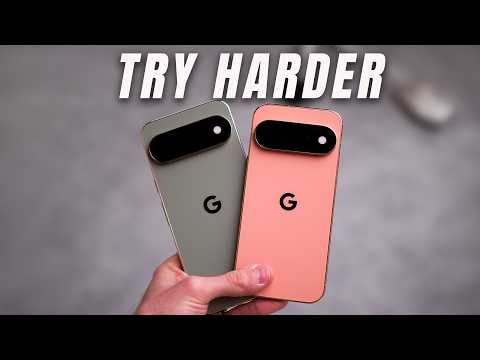
That $899 price immediately puts the Pixel 11 in an interesting position, because Google has done something slightly unusual with this generation. The Pixel 11 Pro is very clearly the better phone, but I’m not convinced that the Pro is the Pixel most people should buy.
The first thing I noticed when switching between the Pixel 11 and Pixel 11 Pro is that the regular Pixel doesn’t make me feel like I’ve picked up the lesser phone.
The Pixel 11 has the same 6.3-inch footprint as the smaller Pro, along with a very crisp and bright 3,000-nit Actua display, Gorilla Glass Victus 2, a 60-120Hz refresh rate, Tensor G6, 12GB of RAM, and solid battery life that should get most people through the day and even beyond.
The phone also retains the triple-camera setup, including a 5x telephoto shooter, and it does not make you settle for a more basic camera arrangement than you might expect from a cheaper flagship.
An $899 phone shouldn't feel like punishment for not spending $1,099.
While I appreciate the brighter display and the new anti-scratch coating the Pixel 11 Pro models bring, along with that gorgeous matte glass finish and polished frame, I don’t feel those differences fundamentally change how I would use the phone.

The Pixel 11’s display is already extremely bright, and feels like a proper flagship in my hand with its polished glass back and satin frame. I haven’t spent my time with it wishing that Google had given me the Pro’s screen or body instead.
That’s admirable and important, because an $899 phone shouldn’t feel like punishment for not spending $1,099.
One of the more visible Pro-only additions is HiLight, which gives the Pixel 11 Pro models a glowing notification light that can respond to Gemini prompts and, eventually, show messages from favorite contacts. It’s a nice touch, and I can see Google doing some interesting things with it over time, but right now its functionality is fairly limited, and I honestly don’t find myself missing it on the regular Pixel 11.
The camera gap is bigger than ever, but the Pixel 11 is no slouch

The camera department is where the Pixel 11 Pro pulls away from the regular Pixel 11 in a way that is impossible to ignore.
The Pro gets a new 50MP main camera with a larger 1/1.3-inch sensor, a redesigned 48MP 5x telephoto that gathers 30% more light, and 120x Pro Zoom powered by the new telephoto hardware. It also gets Instant Night Sight, which Google says can capture Night Sight photos up to 4.5 times faster than previous Pixel generations.
Meanwhile, the regular Pixel 11 doesn’t get any of that fancy telephoto hardware. It makes do with a 48MP main camera, a 13MP ultrawide, and a 10.8MP 5x telephoto, with Super Zoom topping out at 30x.
I’ve been pretty happy with the photos I’ve taken so far, with the camera doing a particularly good job with colors, exposure, and HDR without making everything look overly processed. The macro shots are also impressive, with plenty of detail and a natural-looking falloff, while the portrait mode does a good job separating the subject from the background without going overboard with the blur.
If you’re the kind of person who spends a lot of time shooting at 10x, 20x, or beyond, or if you care deeply about squeezing every last bit of quality out of your phone’s camera, the Pro is absolutely worth considering. The new telephoto lens is a meaningful hardware upgrade, and 120x Pro Zoom is exactly the kind of ridiculous feature that makes the Pro fun to test. However, I’ve also been asking myself, “How often am I actually going to use it?”
For the kind of photography I do most days, and what most people who don’t go about their day shooting peaks and valleys do, 5x optical and 30x Super Zoom is already plenty. Anything beyond that is, most of the time, unusable. While I’ve yet to fully test the zoom range and quality on these new Pixels, what I’ve realized is that all I want is a good main camera, a useful ultrawide, and a telephoto that lets me get closer to something without physically walking toward it. The Pixel 11 gives me all three. So yeah, the Pro camera is better, but I’m not convinced it’s $200 better for the average person.
The regular Pixel gets the camera features I’d actually use

The best part about the Pixel 11’s photography skills is that Google hasn’t stripped all of the fun new camera features here. New features like Magic Capture and Camera Looks are available across the Pixel 11 family, including the standard model.
I would much rather have my phone quietly making sure I get a good photo of a moment than have an impressive zoom mode that I might use a handful of times.
While even Magic Capture may not be something one uses daily, Camera Looks is definitely something that was missing from the Pixel experience for a long time. Google’s new way of giving photos a more personalized aesthetic without requiring you to edit every image afterward is a very welcome addition.

You can also create your own film-inspired looks, with options including Editorial, Velvet, Classic, Digi, Black Tie, and Minimal. Each look can be tweaked further using controls for contrast, highlights, shadows, vibrance, and more. My favorite part, though, is that the Camera app remembers the look you last used, so you don’t have to set it up again every time you open the camera.
Google isn't keeping every new camera trick behind the Pro badge.
And then there is 4K Portrait Video, which is another meaningful addition to the regular Pixel.
The Pro still has the more sophisticated toolkit, particularly with Pro Stable Video and 8K Video Boost, but the regular Pixel isn’t sitting on the sidelines when it comes to new camera features, and it’s good to see that Google isn’t keeping every new camera trick behind the Pro badge.
Google has kept the important Pixel experiences on the cheaper phone

Google’s Pixel experience has increasingly become less about raw hardware and more about what the phone can do for you, and the company hasn’t made the mistake of turning all of those software experiences into Pro-only features.
That includes Gemini Intelligence and Proactive Assistance, which can use information from apps you’ve chosen, notifications, location, and other device signals to surface information based on what you’re doing. These suggestions can appear in places such as At a Glance, Google Messages, the Phone app, and more. This is where the Pixel’s value proposition shines.
I don’t really care whether my phone has 16GB of RAM if 12GB is already fast enough for everything I do. What I do care about is whether the phone can save me a few taps, surface something I need at the right moment, and work like the smart machine it’s supposed to be. With the Pixel 11 series, that’s exactly what you get.
The phone’s setup process now puts Proactive Assistance and Gemini Intelligence front and center, giving you a clear idea of what your Pixel can do for you once it’s fully set up and you’re using it day to day. Honestly, my first brief experience with these features has been very positive.
Once you set everything up, connect Gemini and give it access to the relevant apps, you can mostly forget about any further manual setup. Things just start working, with useful suggestions surfacing when they actually make sense rather than constantly asking you to configure something. It makes using a Pixel feel surprisingly cohesive and, dare I say, satisfying these days — and I’m glad the Pixel 11 gives you that experience without making you shell out more for the Pro.
The regular Pixel also gets the new Circle to Search integration in the Camera app, which lets you point the camera at something and search for it or translate text without taking a photo or jumping into another app. Again, I’m happy this isn’t a feature Google has decided I need to pay extra for.
Meanwhile, Tap to Share is another handy new addition, and while more Android phones are meant to get it eventually, the Pixel 11 series, including the regular Pixel 11, gives you the new Quick Share tool right out of the box.
And then there’s the pink one

I know this is probably the least scientific argument I’m going to make, but after spending time with the Pixel 11 in pink, a.k.a. Hibiscus, I’ve realized I really like having a phone that doesn’t look like every other expensive smartphone.
The Pixel 11 comes in a range of more playful finishes, while the Pro models take a more restrained approach with colors such as Canyon, Olive, Fog, and Obsidian. The Pro also gets a silky matte back and polished frame that certainly makes it look and feel more premium. But I have the pink Pixel 11, and every time I pick it up, I like looking at it.
The regular Pixel 11 feels a little more playful and approachable.
That may sound silly when you’re comparing smartphone hardware, but I actually think there’s something to be said for it. Phones have become increasingly homogeneous, particularly at the premium end of the market, and the regular Pixel 11 feels a little more playful and approachable.
I also think that personality fits the regular Pixel rather well. If the Pro is Google’s phone for people who want the absolute best camera hardware and don’t mind paying for it, the regular Pixel feels like the phone for people who want a really good flagship that they can actually have a little fun with.
I don’t think everyone needs the Pro

In conclusion, after spending a few days with the Pixel 11 and Pixel 11 Pro, I really don’t think everyone needs the Pro model. That said, I wouldn’t tell someone not to buy the Pro Pixels. In fact, if you told me you wanted the best Pixel camera Google makes, I’d point you straight toward the Pro without hesitation. What I would question is whether everyone who has $1,099 to spend on a phone actually needs to spend it.
Pixel 11 still has enough of the good stuff.
The Pixel 11 Pro has a much more impressive spec sheet, and Google has deliberately widened the gap between the two models this year. But the regular Pixel 11 still has enough of the good stuff that the compromises don’t feel particularly painful unless you specifically need the things Google has kept for the Pro.
Of course, we still need to put the new Pixels through our usual battery of benchmarks and spend more time using them as daily drivers before we can give a definitive verdict. But after a few days of hands-on use, I can already say that the regular Pixel 11 has been a pleasure to use, and I haven’t found myself wishing I had the Pro nearly as often as I expected.
7 years of Android updates
Built-in magnets with Qi 2.2
Thank you for being part of our community. Read our Comment Policy before posting.