Affiliate links on Android Authority may earn us a commission. Learn more.
3 reasons Googlebooks will succeed — and 3 reasons they'll fail
Oct 1, 2026 — 5:00 AM ET


Googlebooks are the the next evolution of Google’s Android platform — a desktop iteration to supersede ChromeOS and bring the Android platform to the big screen. It’s a big, bold, and bombastic plan, and it makes the first real new desktop operating system in years. And yet, I have a few thoughts (and concerns) about it.
As a longtime Chromebook user, I’m excited for this new platform, but I also have a few doubts about its success.
Do you plan on buying a Googlebook?
The case for the Googlebook
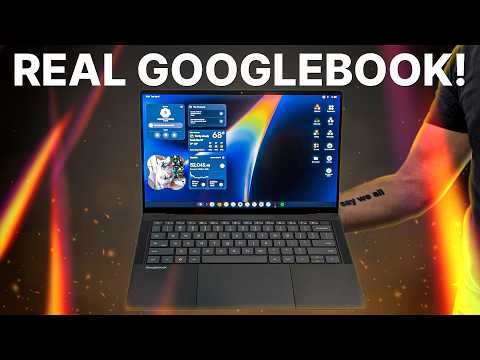
There’s a good reason for Google’s launch slate of Googlebooks being high-end devices one and all: the Chromebook. Chromebooks have a reputation of being cheap and cheerful low-end laptops. While that may have enabled Google to gain a foothold in education, it effectively capped the platform’s growth.
Thus, whenever a high-end, high-spec Chromebook was launched, it was met with the refrain of “who is this for?” At the same time, people who cut their teeth on computing with cheaper Chromebooks had the expectation that they would upgrade to real laptops when they could afford it, so that initial mindshare never created any brand loyalty, merely a group of transient customers predisposed to abandoning the platform as soon as they could afford to.
With Googlebooks, Google is starting fresh. There’s no baggage or expectation that Googlebooks ought to cost a lot less because there are no cheaper Googlebooks to set expectations. Google could have continued with the ChromeOS and Chromebook branding, but those had already come with the ankle weights of cheaper Chromebooks, which had already killed off the viability of the premium Chromebook Plus platform.

As such, Google is launching the Googlebook platform with devices that start at around $1,000. These are high-spec, polished devices that even carry the cachet of the Dell XPS line and come with glow bars on the back to draw attention. If first impressions matter, then Googlebooks have made a great one.
Sometimes, it really is a smart idea to draw a line under it and start over.
Aside from launching with premium hardware, Googlebooks and Googlebook OS also resolve some platform-level issues with ChromeOS while building on its strengths. As someone who, perhaps insanely, has been a Chromebook user since the late 2010s (despite using Windows 11 laptops and MacBooks from time to time), I see the platform’s value. Having a device that’s simply easy to pick up and move around with, no driver updates and endless clicks to do this and that. It’s a good experience for what I do, and I don’t personally mind having the best hardware to do it.

At the same time, ChromeOS did have some cracks. It was built for the Chrome browser first, which meant that every time you dipped into an Android app or played with the Android integration, there was always some jank that detracted from the experience. This time, Android isn’t an add-on; the whole platform is Android, and Android is the platform. Expect Android apps to work as well as they do on Android devices without needing virtual emulation, and Google has already begun debuting Googlebook-exclusive Android apps like the Text editor as well as working with Android app makers to build Android apps and desktop apps for Googlebooks.
On a technical level, much of how modern users interact with computing systems is divorced from the older way legacy systems are conceptualized and operated. To wit, I grew up learning about floppy disks, and I have no idea what those were in practice. Similarly, reports abound of college students having to be taught file management systems and libraries, once de rigueur, now outré. As such, Googlebooks are closer to iPads and Chromebooks in terms of software, which is closer to how iPad-kids and phone-kids use their computers in day-to-day life.
Googlebooks and Googlebook OS resolve some platform-level issues with ChromeOS while building on its strengths.
Finally, Google’s integration with phones running Android 17 means the Android platform genuinely rivals macOS in interoperability between devices. Chromebooks have had some level of integration with Android devices for a while now, allowing you to view notifications, toggle hotspots, view captured photos and, on Pixel phones, access apps remotely. When it works, it’s handy.
When is the keyword, as I’ve often found this feature to be finicky to the point that I don’t consider it very useful. If Google’s nailed this on Googlebooks, and I see no reason why it shouldn’t, considering that now Googlebook OS and Android 17 are effectively the same platform, then Googlebooks become a platform that targets the smartphones used by the majority of the world, allowing for seamless integration between phone and laptop.
Why Googlebooks could fail

At the same time, it’s important to be mindful that Googlebooks are new in execution, but not in conception. Much of what Google has been pushing here has already been attempted with mixed results, and that legacy could be an albatross around the nascent platform.
Take, for example, the promise of laptop Android apps with Googlebooks. Google has been attempting to make large-screen apps on Android viable for a while. It was tried on Android 12L, Android 13, and subsequent Android releases, and it was also tried on Chromebooks. Developers haven’t flocked to showcase what Android can really do on a larger screen. Certainly, Android apps will be much more native on Googlebooks, not running in a container as they are on Chromebooks, but Google has missed a trick in not debuting a slew of flagship Android apps that showcase the power of Android on a laptop.

Take the Google Docs suite, Gmail, Google Calendar, Google Keep, Google Tasks, and entertainment apps like Google TV, YouTube, and YouTube Music. All these services could have debuted with Googlebook OS-optimised apps. Though their tablet versions are good enough, Google would prefer users access these services through the web.
The web is, of course, one of the best places to access these apps no matter what device you’re using, but the point is not simply to create another entry point for those apps, but to showcase what Android can do on a laptop. It’s no good simply expecting developers to build apps for Android laptops when Google itself can’t seem to be bothered. Microsoft understood as much with the failed Windows Phone and Windows 8 app platforms, where apps optimized for the new OS debuted alongside it

Setting that aside, Google has continued pushing AI features on Googlebooks as it does with Pixels. This might be a misreading of the temperature of the room. Unlike Windows or macOS, Googlebook OS is a new operating system, and uptake is incredibly sensitive to market conditions, and parts of the market right now are a little hostile towards generative AI, fairly or unfairly. A new operating system focused on AI is already starting on the back foot, and some commenters online have dubbed the Googlebook the Slopbook, to the point that googling “Google Slopbook” brings up the Googlebook AI overview.
A new operating system focused on AI is already starting on the back foot.
To its credit, Google has been quite mindful about the use of AI in Googlebook. It’s not spotlighting generative AI features around text and image creation, both of which have proven controversial. Instead, it’s highlighting features like its Magic Pointer, Create My Widget, and a free year of Gemini to draw in doubters. Whether that’s going to be enough to draw in the much-needed crowd of younger consumers who are anti-AI out of principle is another matter entirely.
Finally, for a product line that’s pricey, especially compared to the Chromebooks it replaces, Google’s trigger-happy finger for new projects is cause for concern.

The company is known for releasing new products, giving them a short shelf life on the market, and then ruthlessly dispatching them when they fail to perform, no matter how much fanfare they launched with. In the hardware department alone, we’ve seen the Pixelbook, Pixelbook Go, Pixel Slate, and Pixel Tablet all come and go without sequels.
This creates a sort of Mexican standoff between Google and interested buyers. One might be happy to pull the trigger on a Googlebook, but hesitant to do so unless Google commits to long-term support, perhaps opting to wait and see how the platform performs over a couple of years. On Google’s side, the company might be happy to invest in Googlebooks long-term as soon as the sales reach a certain internal threshold, perhaps opting to wait and see over a couple of years.
The caveat here is that the platform’s responsibility is entirely Google’s, and consumers are not obligated to support a platform that might not exist in a couple of years.
Of course, the fact that Google is working with high-end laptop makers and pushing professional-caliber devices makes it more likely that Google will stick with this for a long time, but there’s no doubt that the past will have an effect — at least among the tech influencer class.
Why I want Googlebooks to succeed

Googlebooks are set to launch on October 4, so an extended hands-on will let us know just how well they perform. I’m rooting for this new platform.
More importantly, I think Google is too. Google has been working on its own desktop platform for years. It tried with Chromebooks, a valiant effort, but one that was hamstrung by its budget framing no matter how many premium Chromebooks or Chromebook Plus devices it could throw at us.
Modern computing is increasingly divorced from how old-style computing used to be. Young people are raised with mobile phones and apps, increasingly thinking in those paradigms. Google’s Googlebooks fully embrace that while keeping the useful parts of the old. Google’s made the pitch, and now it’s up to us to see if we can buy in.
Thank you for being part of our community. Read our Comment Policy before posting.