Affiliate links on Android Authority may earn us a commission. Learn more.
I tried an Android phone with a 35mm camera — it completely changed how I take photos
3 hours ago



When you open the camera app on practically any smartphone today, you get more or less the exact same (dare I say predictable) camera perspective. Whether you choose an iPhone, a Pixel, or a Galaxy, the primary camera defaults to a wide 24mm focal length. And that’s for a good reason — it’s a safe, versatile choice that easily captures vast landscapes or large groups.
However, it also forces a distinct, almost distant way of framing your daily life. As someone who shoots often enough with a dedicated camera, the switch in perspective has been noticeable to me, but it’s not something I’ve given much active thought to until I started using the vivo X300 Ultra.
Vivo’s flagship sidesteps the standard convention by placing its massive main sensor behind a native 35mm lens. Instead of handing you a sweeping view that relies heavily on software perspective correction, the X300 Ultra bends the norm by treating mobile photography like a classic street rangefinder with a 35mm prime lens.
The first time I used the phone, the constrained field of view felt rather jarring after years of smartphone camera use. But after over a month of shooting with it, the X300 Ultra has completely rewired my approach to mobile photography. Arguably, for the better.
Which focal length would you rather have as your phone's main camera?
Why 24mm tends to be the default
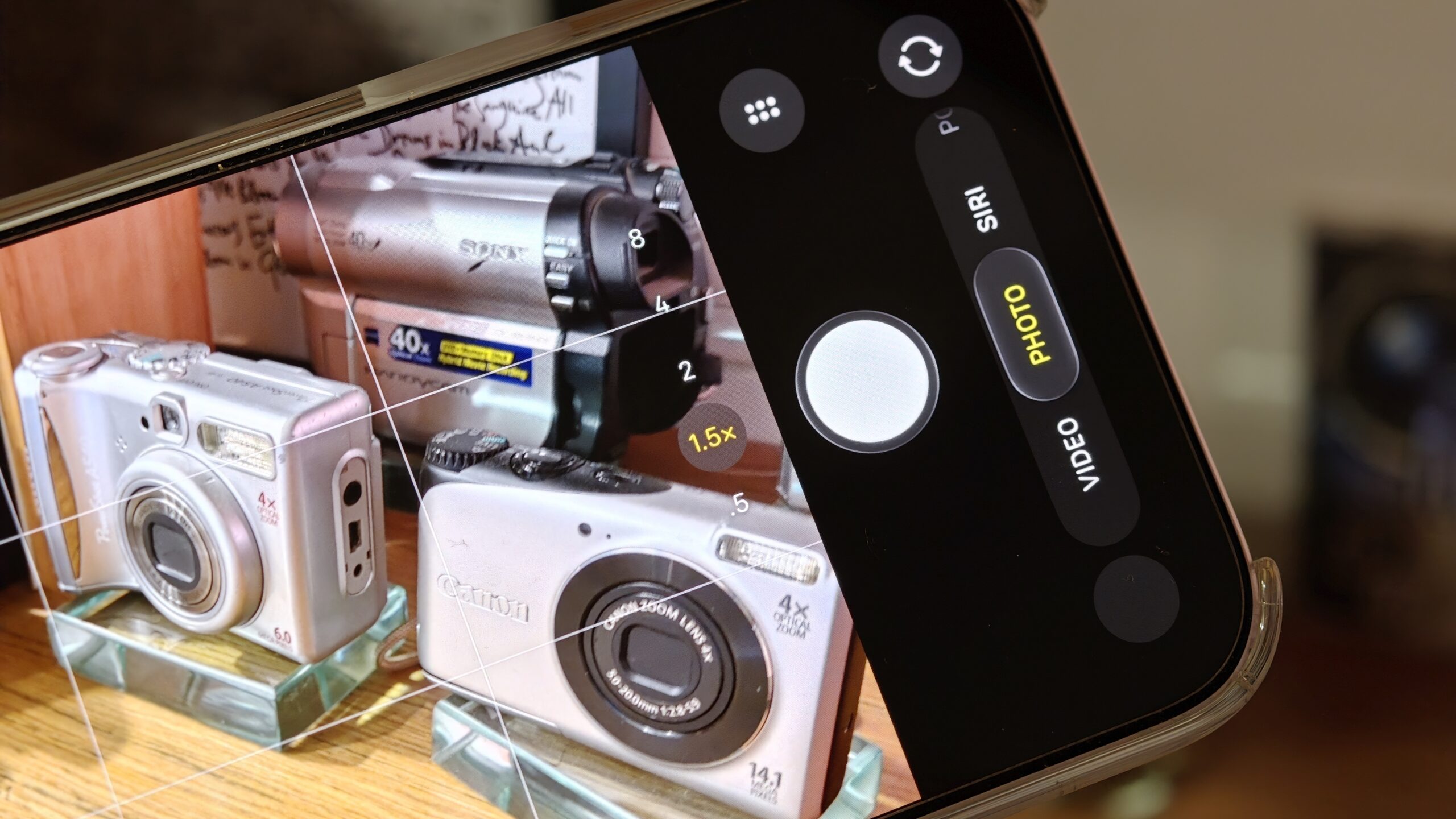
To understand why vivo’s choice matters, we have to look at why the mobile industry fell in love with the 24mm focal length in the first place. Understandably, smartphone manufacturers have treated the primary camera as a catch-all solution. A wide 24mm or 23mm field of view strikes the perfect engineering compromise for smartphone photography.
Your primary sensor tends to be the best sensor, and a reasonably wide lens allows the large sensor to capture plenty of light, provides a forgiving depth of field so everything stays in focus, and ensures that casual users have enough room so that they do not accidentally crop out a friend’s arm or a mountain peak. The wide-enough lens is designed for convenience as a middle ground between an ultra-wide and a telephoto lens.
The industry standardized on 24mm because it’s convenient, not because it’s ideal.
Of course, this wide perspective means that standard phone cameras require significant computational lifting behind the scenes. Modern image signal processors do an incredible job of correcting perspective distortion, straightening out lines near the edges, and keeping faces from looking unnaturally stretched. For the vast majority of point-and-shoot scenarios, this system works flawlessly. You don’t find consumers complaining about 24mm lenses because software magic bridges the gap.
Yet, even with modern perspective correction, a 24mm lens often feels too far back from the action. If you pay close attention to how you use your own phone, you might notice a recurring pattern. How often do you find yourself pinching the screen or tapping the 1.2x or 1.5x button just to isolate a subject? In fact, the 1.2x or 1.5x frame is a popular smartphone photography trend stemming from this exact same issue.
Similarly, when you enter portrait modes on modern flagships, the software almost always defaults to a digital crop that mimics a tighter 35mm or 50mm view. Ask any hobbyist or enthusiast photographer, and they’ll tell you that human stories, street scenes, and everyday objects look more natural when the clutter around them is stripped away using a 35mm, 50mm, or even an 85mm prime lens. The difference is that most phones achieve this look by tossing away pixels and cropping into the scene. In sharp contrast to that approach, Vivo has built the hardware to shoot that perspective natively, and that makes a fundamental difference in the photography experience.
All that sounds great, but what does it mean for you?

Looking at vivo’s marketing, you can see a lot of jargon around the camera sporting a documentary camera, or a photography camera, which sounds like a lot of fluff to me. But strip that all away, and what you get is a camera solution centered around a high-resolution 1/1.12-inch 200MP Sony LYTIA 901 sensor and a true 35mm prime lens. That’s a massive piece of silicon that sits just shy of the traditional one-inch sensor mark, ensuring the camera retains incredible light-gathering capabilities, paired with a classic focal length associated with run-and-gun street photography.
The biggest upgrade here isn’t image quality. It’s how naturally the camera frames everyday life, and lets you capture a more intentional photo.
Usually, when you shoot at 35mm on a traditional phone by tapping the 1.5x button, you are looking at a digital crop from a 24mm sensor, which degrades resolution, limits dynamic range, and alters the natural fall-off of light. Not so here.
So, what does that mean for you?
The immediate real-world difference between a 24mm and a 35mm primary lens is entirely about composition. A 24mm frame often captures the entire room, including the messy power cords in the corner, a stray water bottle on the table, or distracting signs in the background. It records a scene, but it does not necessarily tell a story.
A 35mm lens forces you to be far more intentional about how you compose a shot before you press the shutter button. Because the field of view is narrower, the background is naturally pulled closer to your subject, a physical photography phenomenon known as lens compression. This creates an immediate sense of purpose and isolation.
For example, this off-the-cuff snap of a classic green-and-yellow Delhi auto-rickshaw parked on the side of the road emphasizes the difference between a more intentional shot that draws attention to the subject and one that does not. The 35mm focal length zooms in past the distractions and dead space on either side, keeping the focus entirely on the vehicle and the driver resting inside. Shot from the same place, the former tells a story of a man taking a moment to rest during a hot day; the latter is, well, just another vehicle on the street. Deep, I know.
The 35mm perspective naturally emphasizes the subject without relying on digital cropping.
Unlike the usual 1.5x crop that many of us have gotten accustomed to, there are no quality drops here. For one, it is not a digital crop, and the so-called zoomed-in look you’re getting is purely a result of optics.

That fundamental difference in the lens characteristics of a 35mm lens also reflects in things like bokeh fall-off. When capturing a group of pigeons resting on the edge of a water fountain, the transition from the sharp details of the bird in focus to the soft, rippling reflection in the pool is entirely linear and smooth.
The blur behind and in front of your subject is not a product of aggressive software edge detection or artificial computational bokeh; it is a result of the lens’s physical characteristics.

You can see that subtle bokeh fall-off in this photograph of a stack of pancakes, too. Moreover, the 35mm framing allowed me to get closer to the subject than a similar shot I took with another phone, which had a more conventional field of view. Yes, you can move the camera closer, but as we discussed earlier, that creates unwanted distortion as you get closer to the subject.
The most fun I’ve had shooting street style with a phone
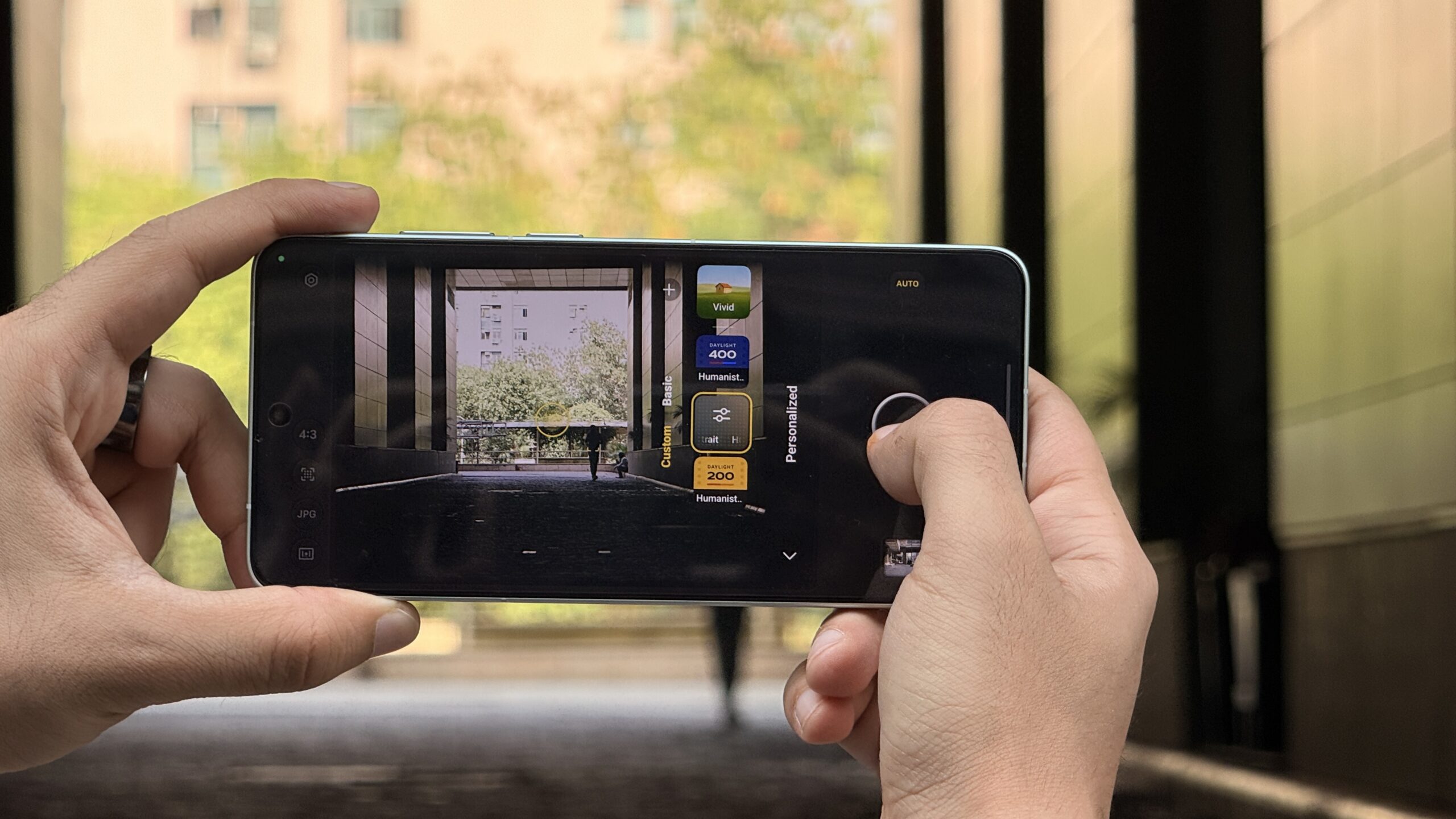
Where the vivo X300 Ultra’s 35mm camera truly elevates the photography experience is in its dedicated Street Photography mode. It’s a feature that the company has been iterating on and evolving over the last few generations, and it’s clear that vivo is leaning hard into the legacy of classic street photographers who spent their entire careers glued to film cameras and 35mm prime lenses for on-the-go documentary work.
This is the first smartphone camera mode I’ve wanted to leave enabled.
The software interface swaps out standard mobile camera controls for a streamlined layout that gives you quick access to prime-lens-style focal-length adjustments, zone focusing indicators, and a curated selection of camera color profiles, including three options dubbed Textured Color, Negative, and Positive styles.
During my time testing the phone, the weather spiked to a brutal 43 degrees Celsius outside, which meant my photography workflow had to change. Instead of lingering on sidewalks waiting for the perfect composition to pop up, I had to move quickly, jumping out of the shade for a few seconds to snap an interesting scene before escaping the heat.
The combination of the 35mm focal length and the rapid, street-photography-oriented interface meant I could reliably capture passing subjects. I’m no Henri Cartier-Bresson, but in my book, what truly brought the shots to life was the film simulation and how good it was at altering the mood of a scene.
There is a lot to say about vivo’s implementation of film-stock styles, particularly the Textured Color profile. It blends seamlessly with the 35mm focal length to give you a very Fujifilm-inspired, photography-forward experience.
The film simulations encourage creativity before you press the shutter.
Shadows are rendered with deep contrast, and midtones carry a rich, contrasty feel. While I prefer to select a film stock before taking the image, you can just as well swap them out after you’ve taken the shot. There’s a lot of flexibility here.
In particular, it handles high-contrast imagery with incredible style, whether highlighting the contrast between a bright red fire hydrant and a yellow wall or altering the mood of a mall’s interior. If punchy, contrasty, print-ready shots are what you want, the color science entirely eliminates the need to run your photos through Lightroom mobile before sharing them. Of course, it’s not a natural-looking image, but the goal here is to give you a stylistic choice, and the phone manages that with aplomb.
Portraits get an equally big upgrade on this device. While an 85mm telephoto lens remains the traditional gold standard for tight headshots, and the phone has one of those too, the 35mm lens is just as capable for portraits that capture ambient context. It allows you to capture a person in their environment without distorting their facial features, as is inevitable with a wide lens, or making them look completely detached from their surroundings.
I asked a friend to capture a burst of shots with two phones out at the park while standing at the same spot. Even though the shots aren’t identical, it is easy to see that the 35mm perspective handles proportions better and displays less distortion around the face.
The vivo looks like it came from a camera. The iPhone still looks like a phone.
On a standard 24mm camera, if a person sits too close to the edge of the frame, the lens geometry can subtly stretch the head or shoulders. That’s not the case here. Overall, though, vivo’s image looks like what you’d shoot with a camera, while the iPhone’s take isn’t bad, but it looks, quite obviously, like a smartphone image.
Where the 35mm main camera struggles

As impressive as the vivo X300 Ultra is, using a 35mm lens as your primary camera isn’t a magical solution for every photography scenario. It requires a distinct learning curve and introduces several real-world trade-offs that might frustrate users accustomed to traditional smartphone focal lengths.
The most obvious limitation appears when you step indoors into commercial spaces or smaller rooms. If you are sitting at a small table inside a cafe or a mall food court and want to snap a picture of your surroundings, the 35mm lens can feel incredibly restrictive, making the space look smaller than it is. Capturing a top-down view of a dining layout or a candid shot of people at a nearby table requires tilting the phone significantly or standing up from your seat just to fit everything into the frame. In some cases, I’ve resorted to using the ultra-wide camera and cropping in, but that defeats the purpose of having an excellent primary sensor.
The X300 Ultra asks more from the photographer than the average smartphone.
Furthermore, casual architectural snapshots, like the capture of the building above, can lose their sense of effortless scale. If you want to capture a quick, dramatic photo of a towering skyscraper from the sidewalk directly below it, a 35mm lens forces a very tight perspective. To fit the entire structure into a single frame, you once again have to tilt the phone at an incredibly steep upward angle, which tends to skew the building’s straight lines and alter your composition. The 35mm focal length simply does not offer that instant, effortless drama. If your framing is sloppy or your alignment is off by even a few degrees, a 35mm photo of architecture can easily look flat and cramped rather than impressively wide.
All that to say that while shooting with a 35mm lens might be truer to capturing street photographs with a dedicated camera, it also benefits from a similar degree of skill or willingness to learn to pull off impressive-looking shots.
The vivo X300 Ultra shows why smartphone cameras need a new direction
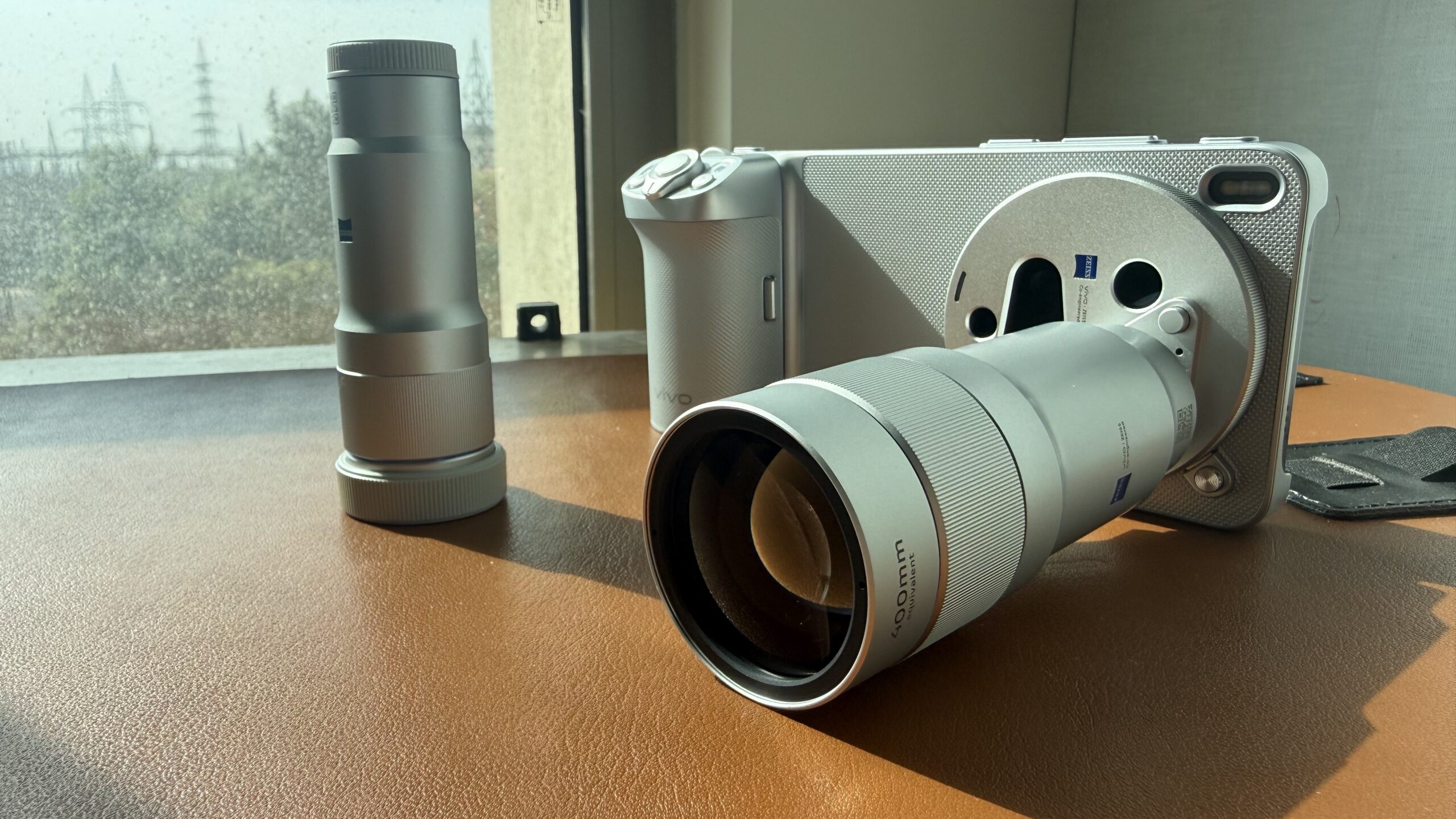
The vivo X300 Ultra, to me, is a necessary reminder that smartphone cameras do not have to follow a single path. At a time when photography basics have peaked across all smartphone tiers, and brands are looking to AI as the next big thing over ever-increasing zoom numbers or megapixel counts, a change in perspective towards the photography experience is a refreshing departure from the norm.
Not every flagship needs a 35mm lens, but every flagship could use this kind of out-of-the-box thinking.
By centering its flagship experience around a native 35mm camera, vivo has demonstrated that altering the physical optics can be far more impactful than stacking up iterative software updates year after year. It trades the forgiving safety of an ultra-wide default view for a classic prime lens that focuses more on what you’re trying to say. Yes, it’s a great camera, but that’s besides the point. It is a camera that makes you pause for a second to think about what you want to shoot. That’s not going to be for everyone, but then again, the vivo X300 Ultra is squarely an enthusiast phone.
While the tight perspective in indoor settings and the required learning curve mean it will not be the perfect fit for every casual user who just wants to snap a quick, carefree photo, it represents exactly the kind of hardware risk that drives mobile technology forward. While I don’t see a 35mm lens becoming the norm anytime soon, other smartphone manufacturers should take note.
The mobile space does not need another device that safely captures absolutely everything in front of it; it needs more phones that focus more on the art of photography and help you capture more meaningful, not just technically better, images.

Thank you for being part of our community. Read our Comment Policy before posting.